convoyeurs SAVOYE

Warehouse conveyor system: modular conveyor system INTELIS

What is a warehouse conveyor system and modular conveyor system?

A warehouse conveyor system is a mechanical handling solution used to transport goods (bins, trays, or cartons) automatically from one point to another within a facility. It reduces manual carrying and optimizes the internal flow of products.

How a modular conveyor system works in logistics ?

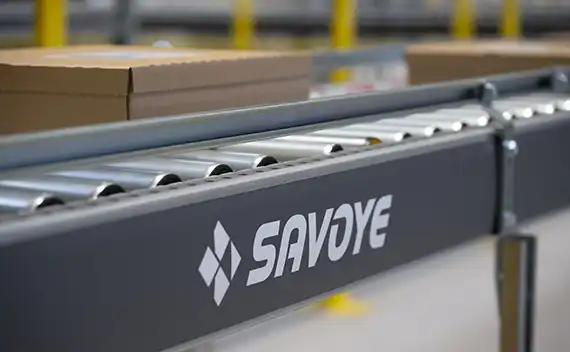
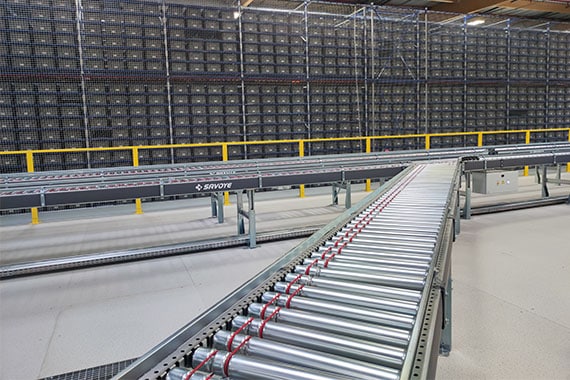
Unlike traditional welded conveyors, a modular system like SAVOYE’s INTELIS consists of standardized, pre-wired “Plug & Play” sections. Each module has its own intelligence, allowing you to snap sections together like building blocks. This makes it incredibly easy to install, extend, or reconfigure as your warehouse layout evolves.

une image de convoyeur plug and play

Types of warehouse conveyor system: roller, belt and accumulation conveyors

Not all conveyor systems are the same, and understanding the differences between the main types helps logistics and supply chain directors make a more informed choice when designing or upgrading their material handling infrastructure.

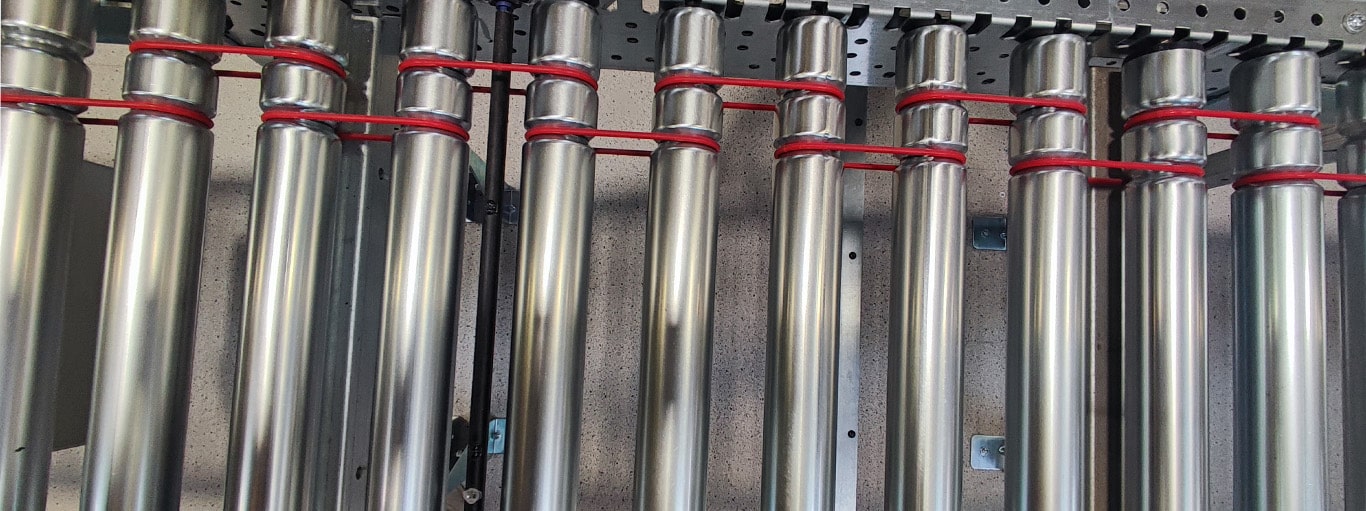
Roller conveyors are the most widely used type in warehouse environments. Products move along a series of motorized or gravity-driven rollers, making them particularly well suited to the transport of rigid, flat-bottomed items such as bins, trays, cartons, and totes. In the INTELIS range, motorized roller conveyors form the backbone of most handling circuits: each roller is independently driven, which means the line can run only where a load is present, dramatically reducing energy consumption.

Belt conveyors use a continuous looped belt to carry goods. They are especially effective for items that are irregular in shape, too light to activate rollers reliably, or that need to travel on an incline or decline between levels. Belt sections within a modular conveyor system such as INTELIS can be inserted at specific points in the circuit to handle these transitions smoothly, without disrupting the overall flow.

Accumulation conveyors are designed to hold goods in a buffer zone without applying pressure to the products queued behind them. This zero-pressure accumulation capability is critical in high-throughput environments where downstream processes such as picking, sorting, or packaging operate at a different cadence from the upstream supply. INTELIS modules integrate accumulation intelligence directly into each section, allowing the system to absorb flow variations automatically without operator intervention.

In practice, most warehouse conveyor installations combine all three types within a single circuit, using each where it performs best. SAVOYE’s design teams dimension and configure the right mix of roller, belt, and accumulation modules for your specific product profile, building layout, and throughput requirements.

Benefits of a warehouse conveyor system and modular conveyor system

Improve flow efficiency

with a warehouse conveyor system

Increase flexibility

with a modular conveyor system

Reduce operational costs

with automated conveyor systems

Silent and energy-efficient warehouse conveyor system with modular conveyor system design

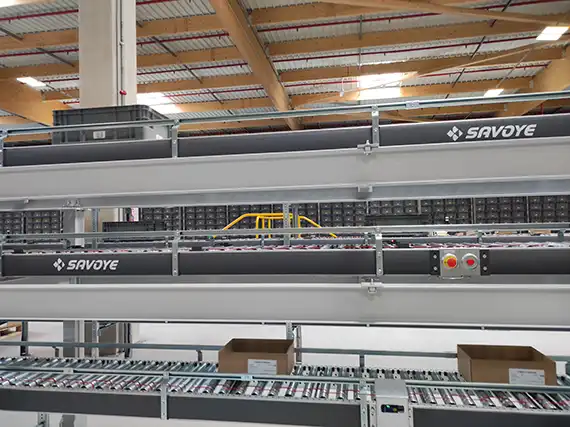
Intelligent, modular, quick to install and very energy efficient… INTELIS is not short of assets. Fully developed by SAVOYE, this range of conveyors covers the handling of light loads (up to 32 kg).

une photo de convoyeur en entrepôt logisitique
PLUG & PLAY ARCHITECTURE

Modular conveyor system for flexible warehouse conveyor system integration

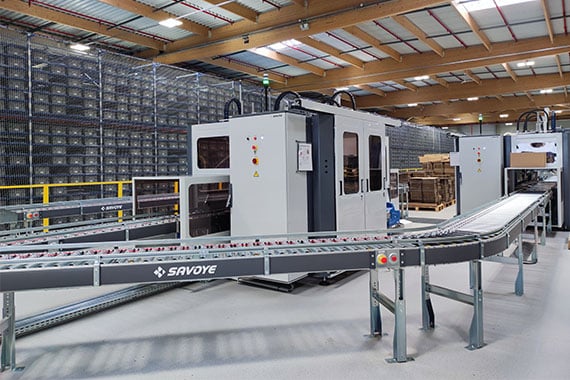
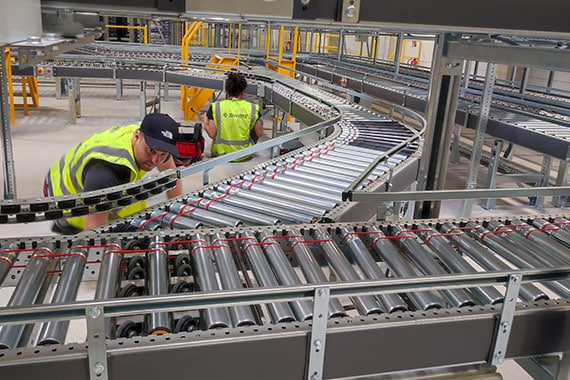
Its innovation lies in its fully modular architecture. INTELIS is solely made up of standard elements, which are 100% independent which are connected directly on site in Plug and Play mode. Each module has its own mechanical and electrical structure, and its own control unit: it is delivery ready to be installed and connected up. Straight, curved, grooved, 45° and 90° transfer modules meet all handling needs: launching, picking stations and sorting for shipping.

convoyeurs SAVOYE
RAPID SET-UP

Scalable warehouse conveyor system with modular conveyor system architecture

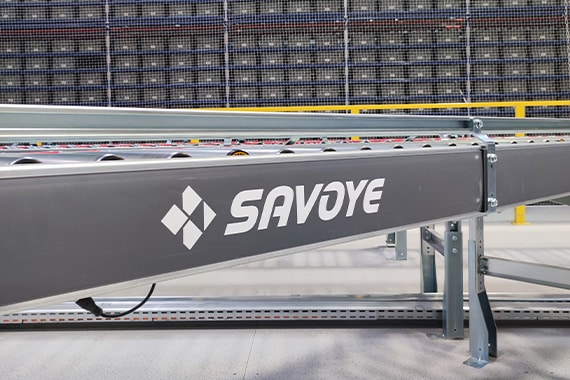
Manufactured with a reduced number of parts, INTELIS has a connector system that is directly integrated into the spars. Does the configuration of the line change? Configuring the electronic card can be done at any time, either directly or remotely. Lastly, if the installation is extended or moved to another site, all parts can be reintegrated regardless of the new configuration. The installation can be changed rapidly and simply depending on your requirements, busy periods and configuration of your warehouse.

convoyeurs SAVOYE
MAXIMUM AGILITY

Warehouse conveyor system adapting to your business volume with modular conveyor system

INTELIS’ controls are fully decentralized and don’t require any programmable controller. Each module has its own electronic card that enables it to adapt its behavior depending on its own configuration and the flow to be conveyed. The elements are capable of accelerating automatically to catch up with downstream loads, accumulate packages without pressure, for greater fluidity and responsiveness.

convoyeurs SAVOYE
SIMPLE MAINTENANCE

Easy maintenance of warehouse conveyor system with modular conveyor system technology

If an electronic card needs to be changed, or an electrical box replaced, these operations can be done easily. Depending on the type of module, the electronic cards can be configured, either by adjusting the encoder discs, or via remote transfer or with an SD memory card. Lastly, thanks to the limited number of parts in their design, the INTELIS modules significantly reduce the amount of space required to store spare parts.

convoyeurs SAVOYE

Key strengths of a warehouse conveyor system and modular conveyor system

100% electric

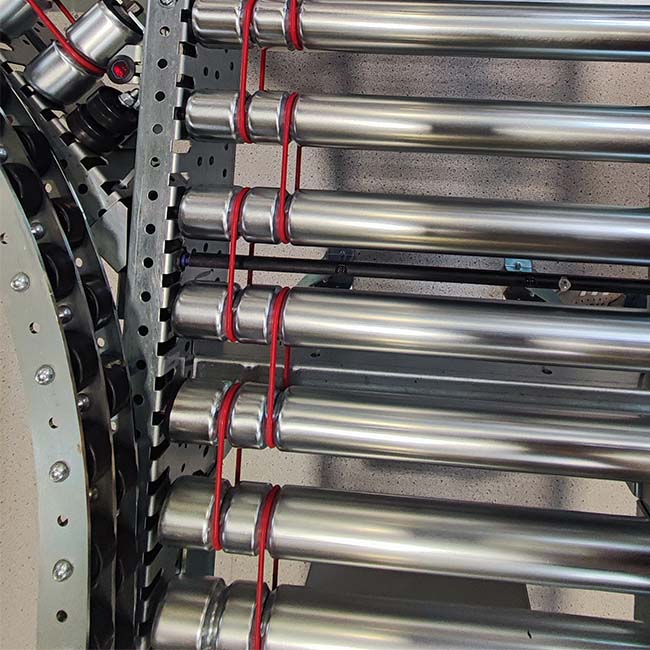
motors that are directly integrated in the rollers and a Stop&Start principle

Plug & Play

agile, flexible and ready to go

Agility 

Highly adaptable to your business, whatever your flows

Highly adaptable warehouse conveyor system with modular conveyor system for all logistics flows

Download the product sheet

convoyeurs SAVOYE

Warehouse conveyor system integration with WMS and WCS

A warehouse conveyor system only delivers its full value when it operates as an intelligent component of your broader logistics architecture, not as a standalone piece of mechanical equipment. That is precisely the philosophy behind INTELIS and its integration with SAVOYE’s software layer.

Each INTELIS module is equipped with its own embedded electronic card, which communicates in real time with the Warehouse Control System (WCS). This means every carton, bin, or tray moving along the conveyor line is tracked continuously from the moment it enters the circuit to the moment it reaches its destination. The WCS uses this data to manage routing decisions, divert flows toward the correct sorting lane, prioritize orders, and balance throughput across multiple workstations.

At the level above, the Warehouse Management System (WMS) orchestrates the overall logistics operation: order release sequences, picking waves, replenishment triggers, and shipping deadlines. The conveyor system receives instructions from the WCS in real time and adjusts its behaviour accordingly, accelerating flows ahead of a cut-off time, buffering product ahead of a packaging station, or redirecting a mis-sorted carton without any manual intervention.

For operations already running a third-party WMS or ERP, INTELIS integrates via robust APIs and standard communication protocols, ensuring that your investment in SAVOYE conveyor technology complements your existing systems rather than requiring you to replace them.

The result is a warehouse conveyor system that is not simply moving boxes from A to B. It is an active, responsive part of your logistics intelligence, one that helps you process orders faster, reduce errors, and maintain service levels even during peak periods.

Warehouse conveyor system for distribution centers in the UAE and Middle East

Distribution centers across the UAE, Saudi Arabia, Qatar, and the broader GCC region are operating under mounting pressure. Order volumes are growing. Customer expectations for next-day and same-day delivery are rising. Peak periods such as Ramadan, White Friday, and national sale events place extreme and sudden demand on warehouse operations that were often not designed to absorb them.

In this environment, the ability to move goods through your facility quickly, reliably, and at scale is not a secondary concern. It is a direct determinant of your service quality, your operational costs, and ultimately your competitiveness.

SAVOYE’s INTELIS warehouse conveyor system is being deployed across the Middle East in precisely these contexts.

In e-commerce and retail, where thousands of individual orders need to be picked, sorted, and dispatched within tight windows, INTELIS provides the high-speed, high-cadence flow automation that manual or semi-automated operations cannot sustain. Its Plug & Play modularity means the system can be reconfigured rapidly when order profiles change or when new product categories are added to the range.

In agri-food and consumer goods distribution, where freshness constraints and traceability requirements demand precise sequencing and minimal handling time, INTELIS accumulation conveyors ensure smooth, pressure-free flow that protects product integrity while maintaining throughput.

For third-party logistics providers (3PLs) managing multiple clients under one roof, the flexibility to reconfigure conveyor circuits by swapping and reordering modules rather than commissioning costly engineering works is a decisive operational and financial advantage. When a client’s contract ends or a new one begins, the INTELIS layout adapts to the new reality quickly and cost-effectively.

Across all these sectors, the characteristics that define the regional context, the significance of peak periods, the prevalence of leased warehouse facilities, the need to grow capacity without committing to permanent heavy infrastructure, make INTELIS a particularly strong fit for Middle Eastern distribution operations.

SAVOYE has a dedicated team in the Middle East, combining global intralogistics engineering expertise with local knowledge of the region’s operational and regulatory environment. Whether you are building a new distribution center, expanding an existing one, or looking to automate a previously manual flow, our teams are ready to assess your project and design a conveyor solution sized for your current needs and scalable for your growth ambitions.

Learn more about our warehouse conveyor system and modular conveyor system (INTELIS)

All about Warehouse Conveyor System Modular Conveyor System Q&A

How much does a warehouse conveyor system cost?

The cost of an INTELIS system is highly competitive because it significantly reduces installation and engineering hours. The total price depends on the linear meters required and the number of “intelligence” points (diverters, merges, or curves). At SAVOYE, we provide scalable pricing that allows you to invest only in the modules you need today, with the ability to add more as your volume grows.

What is the ROI of a modular conveyor system?

The ROI for the INTELIS system is one of the fastest in the industry, often achieved in less than 18 to 24 months. Savings are generated through:

  • Reduced Installation Costs: up to 50% faster to set up than traditional systems.
  • Energy Efficiency: the system only runs when a load is detected (Stop & Start technology), drastically lowering electricity bills.
  • Operational Flexibility: the ability to reconfigure the system yourself without hiring expensive external contractors.

How long does it take to install a warehouse conveyor system?

Thanks to the Plug & Play technology of SAVOYE, installation time is reduced by half. While a traditional system might take weeks of on-site wiring and testing, an INTELIS modular conveyor can be assembled and operational in just a few days, depending on the complexity of the circuit.

Can a modular conveyor system integrate with WMS or WCS?

Absolutely. Each INTELIS module is equipped with on-board intelligence that communicates natively with our WCS (Warehouse Control System). This allows for real-time tracking of every carton on the line and seamless integration with your ODATiO WMS for advanced routing, sorting, and order prioritization.

Is a warehouse conveyor system suitable for high-volume logistics?

Yes, it is engineered for it. SAVOYE’s INTELIS conveyors are designed to handle high-cadence flows (up to several thousand parcels per hour) with extreme reliability. The modular nature actually increases uptime: if one section requires maintenance, it can be swapped out quickly, ensuring that your high-volume logistics operation never grinds to a halt.

What is the difference between a modular and a traditional conveyor system?

The difference goes well beyond the way the components are assembled. It concerns the entire logic of how you invest in, operate, and evolve your material handling infrastructure.

A traditional welded conveyor is designed and built as a fixed, site-specific installation. Sections are fabricated and welded on site, wiring is centralized, and the layout is determined once and then locked in. This approach can be cost-effective for stable, high-tonnage operations where the flow never changes and the facility is permanent. But for most modern distribution environments, this rigidity is a significant liability.

When your business grows, when order profiles shift, when a new product category requires a different handling circuit, or when you move to a new facility, a traditional conveyor system becomes an obstacle rather than an enabler. Reconfiguration requires cutting and re-welding metalwork, rewiring centralized control systems, and bringing in specialist contractors, all of which mean extended downtime and substantial unplanned cost.

INTELIS, SAVOYE’s modular Plug & Play conveyor system, is built on the opposite principle. Every module arrives pre-assembled, pre-wired, and ready to connect. Installation is a matter of days, not weeks. Each section carries its own embedded intelligence, so there is no centralized controller to reprogram when the layout changes. If you need to add a new picking station, extend a sorting loop, or redirect a flow, you add or reposition modules and update the electronic configuration, remotely if needed, without touching the rest of the line.

Maintenance follows the same logic. Rather than waiting for a specialist to diagnose and repair a fault in a centralized electrical system, a technician simply swaps the affected module. The line is back in service in a fraction of the time.

Over the full lifecycle of the installation, and particularly for operations that are growing, evolving, or operating in leased facilities where portability matters, the total cost of ownership of a modular conveyor system is consistently lower than that of a traditional welded equivalent. The upfront investment is comparable; the long-term economics are in a different category entirely.