




Pallet shuttle system for warehouses in the UAE and Middle East
Across the UAE, Saudi Arabia, Qatar, and the wider GCC, the economics of warehouse space are unforgiving. Real estate costs in logistics hubs such as Dubai, Abu Dhabi, and Riyadh are significant, and the pressure to extract maximum storage capacity from every square metre of floor space is a constant operational reality for supply chain and logistics directors in the region.
At the same time, the nature of demand in the Middle East creates specific storage challenges that conventional racking systems are not always designed to address. Seasonal peaks, large-volume replenishment cycles, temperature-controlled storage for food and pharmaceutical products, and the need to manage high quantities of a limited number of SKUs efficiently are all characteristics that define many of the region’s most demanding warehouse environments.
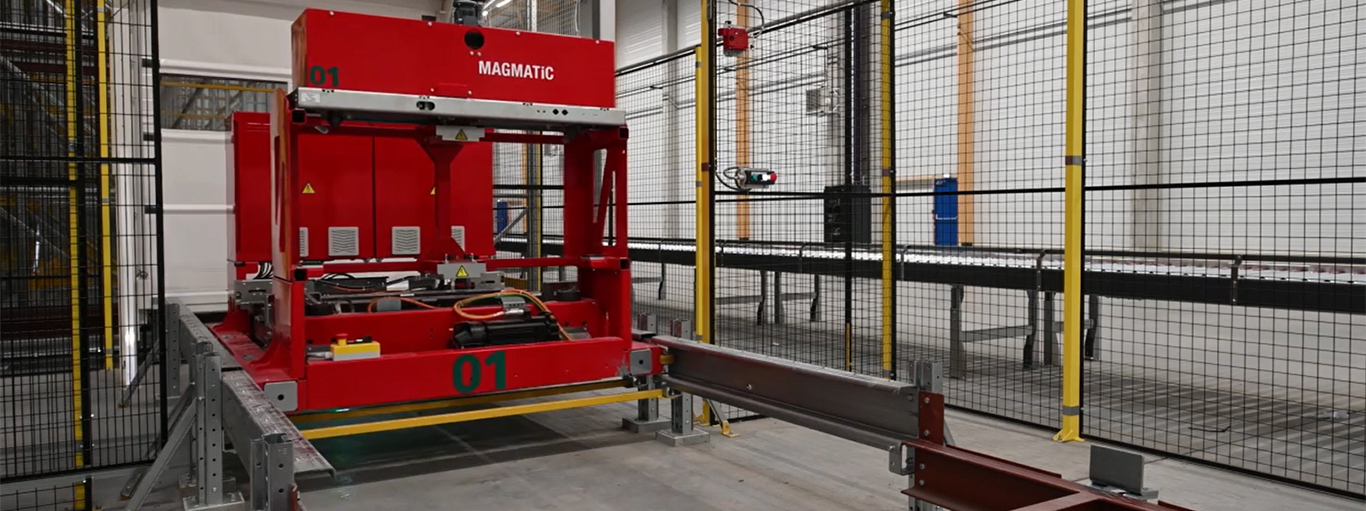
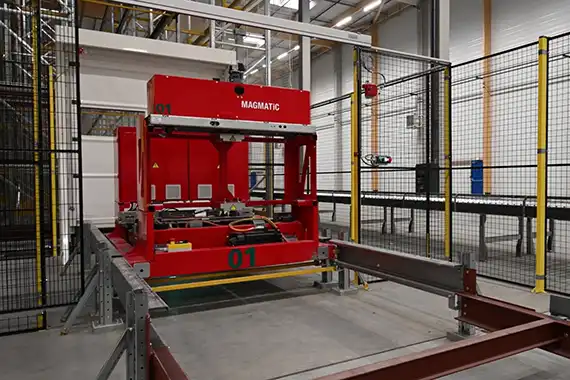
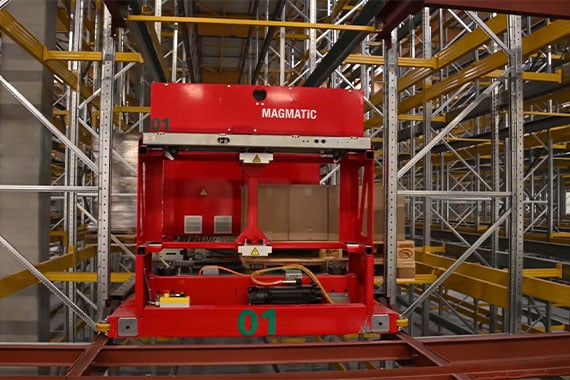
The MAGMATIC pallet shuttle system is built precisely for these conditions.
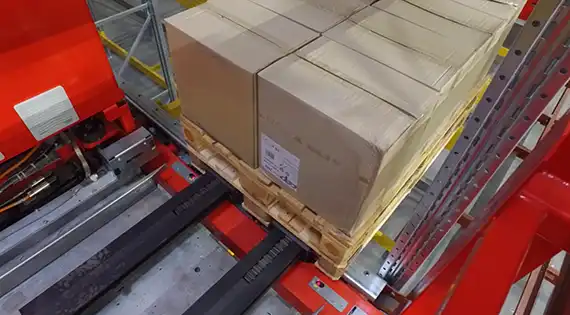
In food and beverage distribution, where large volumes of palletised product need to be stored, rotated, and retrieved rapidly while maintaining cold chain integrity, MAGMATIC operates reliably in chilled and freezing environments. The shuttle works autonomously within the storage channels, moving pallets without the need for a forklift to enter the racking structure, which reduces the risk of rack damage, improves safety, and significantly accelerates the storage and retrieval cycle.
In fast-moving consumer goods and retail logistics, where buffer stock needs to be managed efficiently ahead of peak periods such as Ramadan, Eid, and national promotional events, the high-density storage architecture of MAGMATIC allows substantially more pallets to be held in the same footprint compared to selective or drive-in racking. When demand spikes, the system responds at the pace the operation requires.
In manufacturing and production logistics, where raw material and finished goods buffers need to be managed close to the production line without consuming valuable factory floor space, MAGMATIC’s compact vertical and horizontal storage profile makes it possible to hold significant pallet volumes in a constrained footprint, with FIFO or LIFO rotation managed automatically by the shuttle.
For third-party logistics providers managing high-volume, low-SKU flows for their clients, the combination of density, throughput, and reduced forklift involvement that MAGMATIC delivers translates directly into lower operating costs, faster turnaround times, and a stronger service proposition.
In all these contexts, MAGMATIC addresses the specific challenge that defines pallet storage in the Middle East: doing more with the space you have, without compromising on the speed, safety, or flexibility your operation demands.
SAVOYE has a dedicated presence across the Middle East, with engineering and project teams that understand the region’s operational environment, its regulatory requirements, and the logistical realities of building and running high-performance warehouses in this market. Whether you are designing a new facility, expanding an existing one, or replacing an underperforming racking system, our teams will assess your project and propose a MAGMATIC solution sized for your volumes, your building constraints, and your growth ambitions.