What is a carton sealing machine?
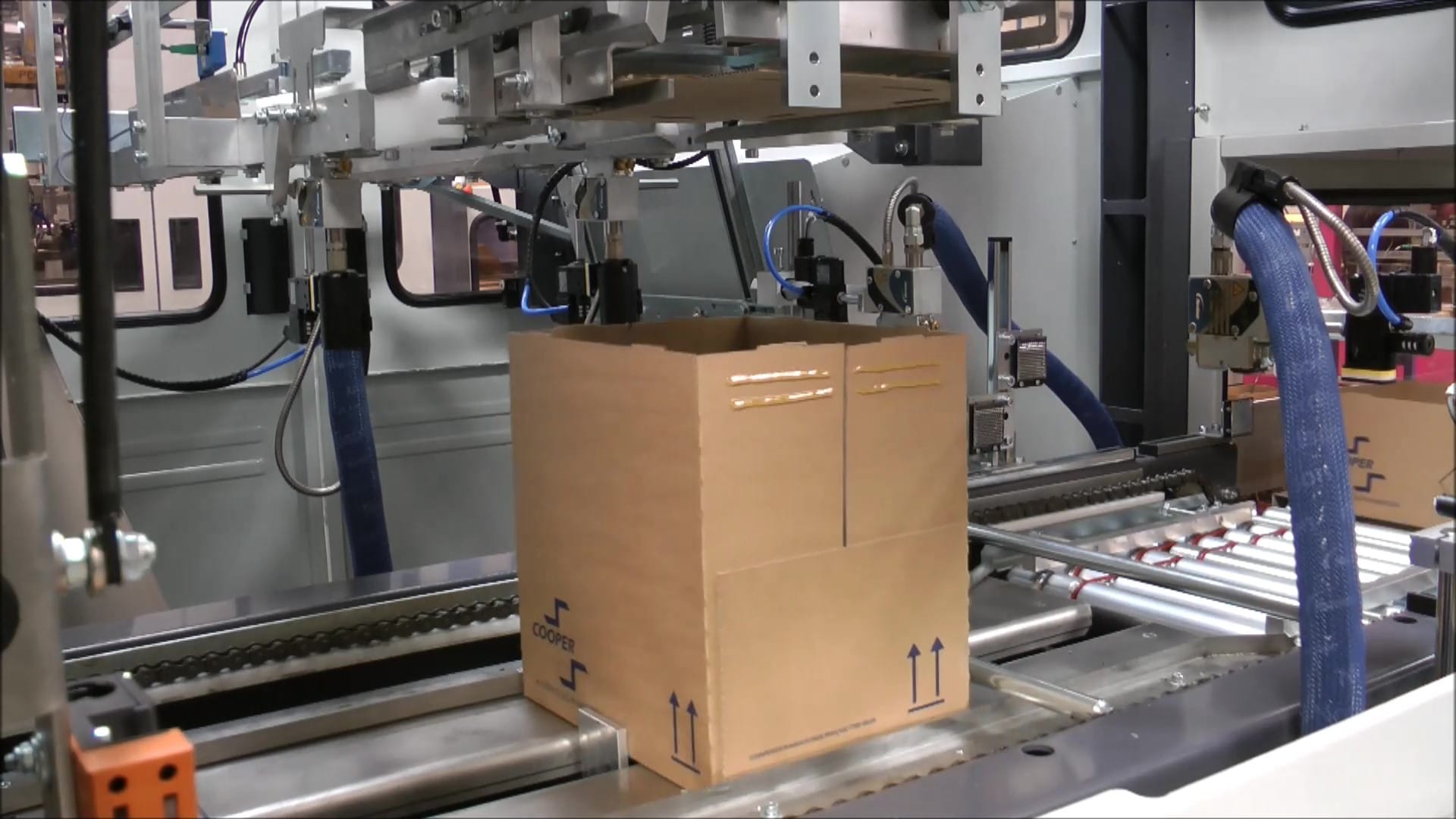
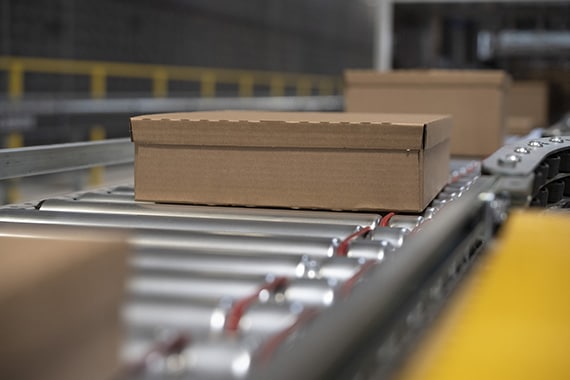
A carton sealing machine is an automated industrial system designed to fold, glue, tape, or apply a lid to secondary retail cartons or boxes, ensuring they are tightly closed and ready for shipping.
What is a case sealing machine?
A case sealing machine specifically targets larger shipping cases, trays, or master shippers (often made of heavy, thick corrugated cardboard). It closes the outer container flaps securely to handle the mechanical stresses of palletization and heavy freight transport.
What is the difference between a carton sealing machine and a case sealing machine?
While the terms are frequently used interchangeably, the practical difference lies in the structural material and position in the supply chain. Carton sealing handles smaller consumer-facing packaging or standard e-commerce boxes. Case sealing focuses on the structural rigidity of larger transport-ready outer boxes designed for industrial transport or heavy load stackability.
How does a carton sealing machine work in a packaging line?
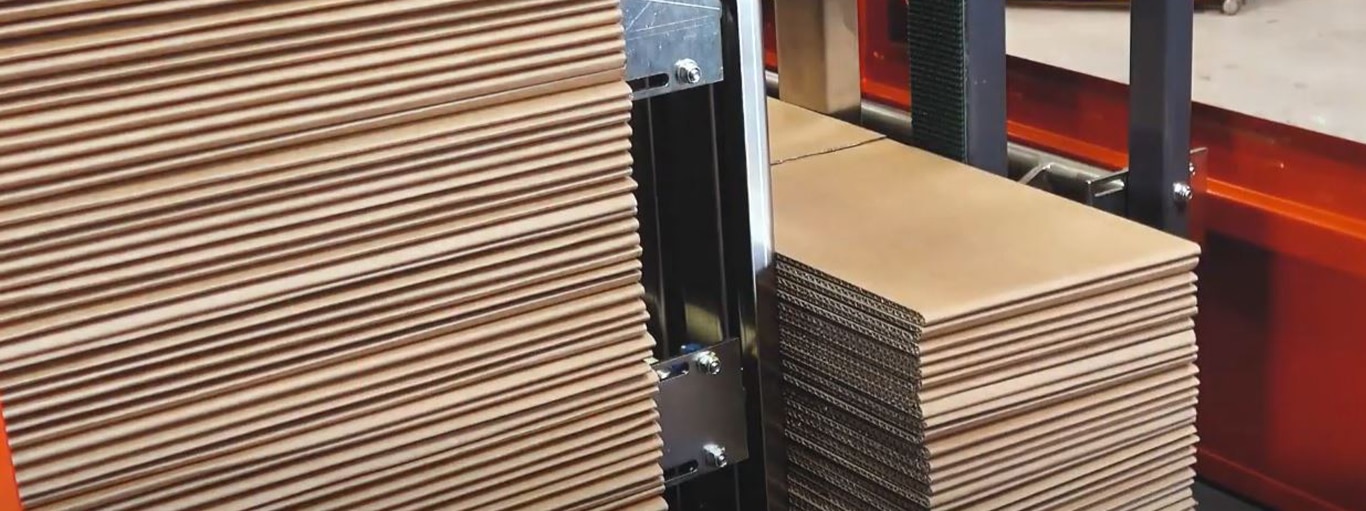
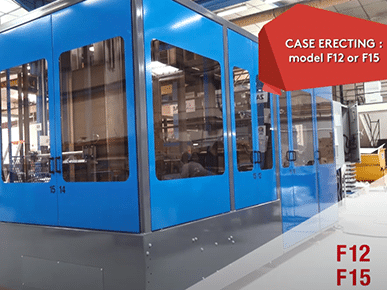
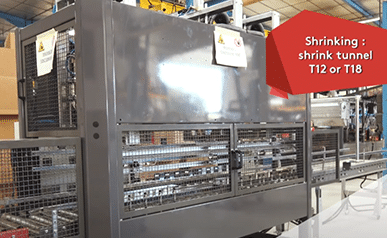
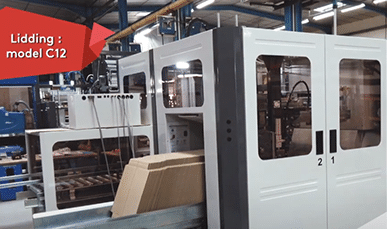
In an automated packaging line, the process is fully sequential. In a SAVOYE PAC 600® configuration, the machine forms the box from a flat blank utilizing optimized cardboard bands. As items move down the conveyor into the box, a thin, industrial-grade plastic film is integrated and mechanically applied over the items. The box then enters a heating tunnel where the film shrinks smoothly over the goods, completely anchoring them to the base. Finally, a matching cardboard lid is pressed or glued onto the top, finishing a tamper-proof container without any manual sealing required.
How does a carton sealing machine reduce packaging costs & materials?
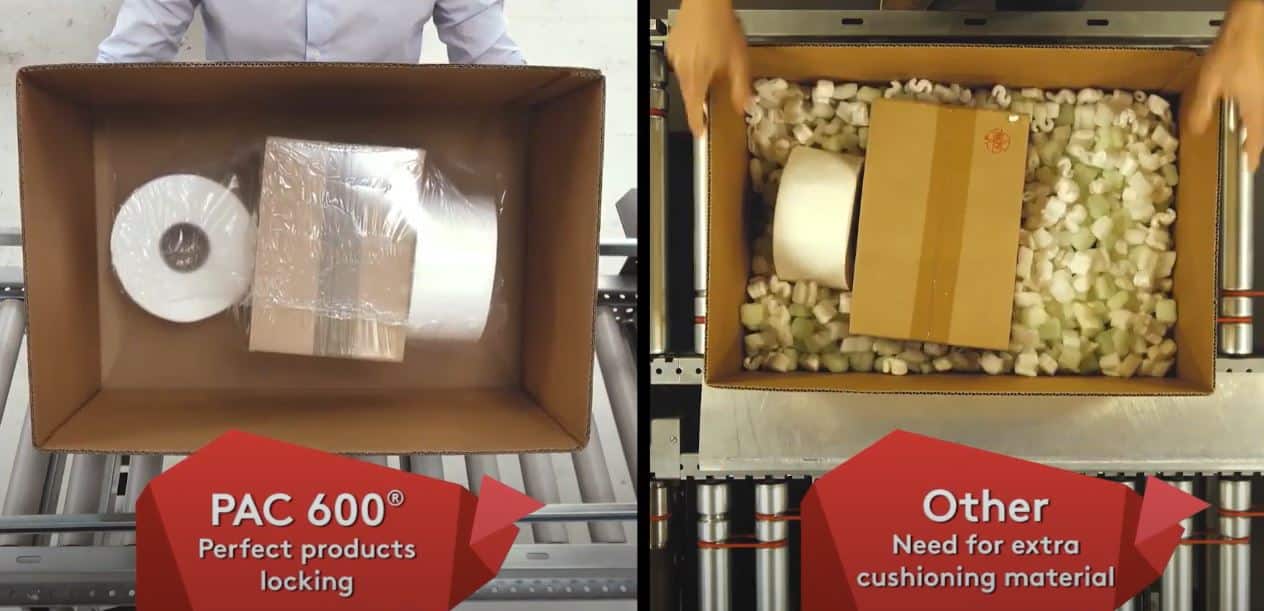
Traditional packing relies on standard boxes that generate significant corrugate overlap (flaps) and require filler materials (bubble wrap, paper, air pillows) to keep items from shifting. The SAVOYE PAC 600® system changes this dynamic entirely:
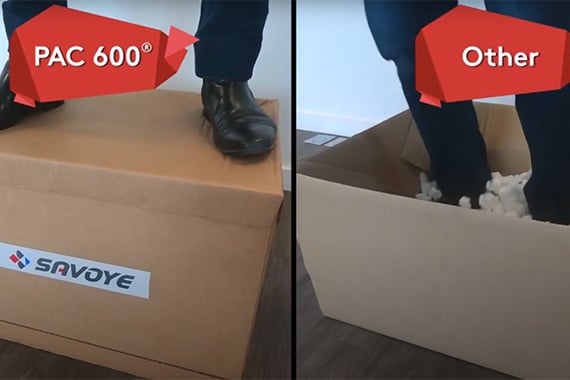
- Flap-free engineering: the structural design uses a flat box base and a fitted lid, dropping overall cardboard consumption significantly compared to standard American slotted boxes.
- Elimination of infill consumables: because the integrated shrink-wrap film wedges the items firmly against the cardboard base, there is absolutely no need for loose plastic peanuts, paper fillers, or auxiliary bubble wraps.
- Reduced product damages: by eliminating movement inside the box, the system directly avoids the heavy operational expenses associated with product breakage, transport returns, and customer disputes.
What types of products can be handled by a carton sealing machine?
The automated PAC 600® line is highly versatile and engineered to protect both light, fragile items and heavy consumer goods. It provides top-tier stabilization for high-value electronic components, high-end perfumes and cosmetics, industrial tools, medical supplies, and sensitive specialized retail items that cannot afford to shuffle or rattle during bumpy final-mile deliveries.
What is the throughput of a case sealing machine?
Production speeds are built for demanding warehouse tempos. The automated PAC 600® system achieves a throughput of up to 16 boxes per minute during the primary carton-forming phase. When it reaches the final closure stage, the specialized lidding modules can scale up to wrap and secure up to 24 boxes per minute, keeping shipping docks running at maximum velocity even during high-demand peaks.
Can a case sealing machine be integrated into an automated warehouse system?
Yes. Modern packaging machinery is built for seamless architectural integration. The PAC 600® line fits cleanly into existing automated distribution setups. It interfaces directly with standard line conveyor systems, downstream weight-checking scales, automated labeling machines, robotic palletizing cells, and high-performance Goods-to-Person picking stations.
Are packages produced with a case sealing machine recyclable?
Environmental responsibility is built straight into the technology. Outbound boxes processed by the PAC 600® line are designed to meet modern international and regional sustainability demands. The outer corrugated cardboard is 100% recyclable. Additionally, the interior structural PE shrink wrap film contains roughly 50% recycled material and is easily separated from the cardboard by the end consumer. Both elements are fully recyclable within standard waste streams, ensuring compliance with future circular economy regulations.
How much does a carton sealing machine cost & what is its ROI?
- Investment scope: the overall CAPEX depends on your required throughout speed, box dimensions, and whether you need the hybrid film-wedging module (F12) or the pure box-forming module (F16).
- Return on investment (ROI): high-volume operations typically experience a full return on investment within 14 to 24 months. The baseline financial payback stems directly from an immediate reduction in structural cardboard usage, the total elimination of secondary cushioning materials, lower shipping fees due to optimized volumetric package heights, and lower overhead costs through automated end-of-line labor.