
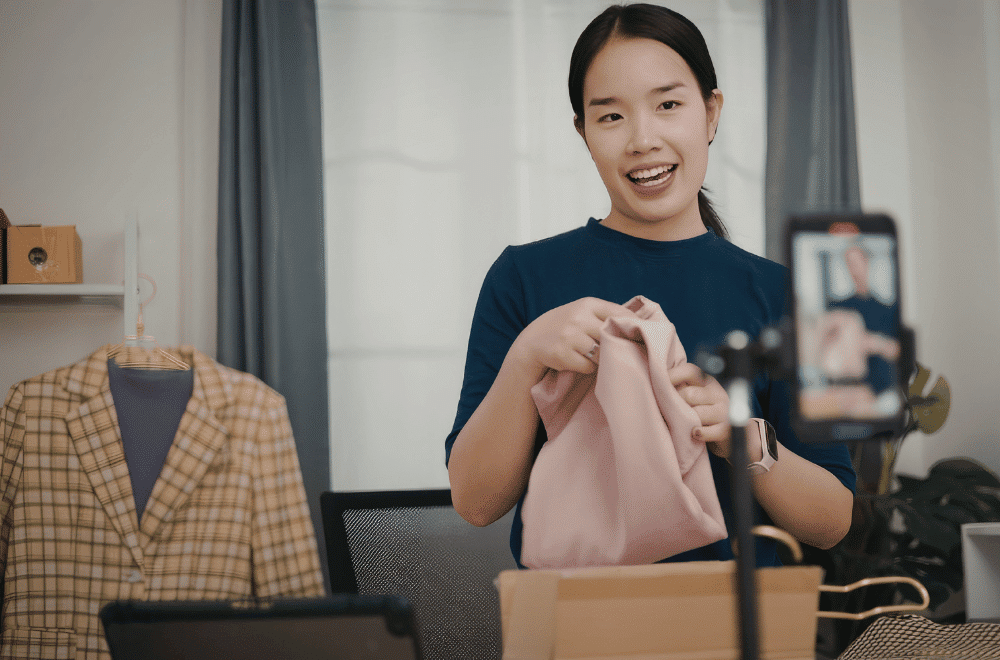
Unboxing: When the Unboxing Experience Becomes a Strategic Asset

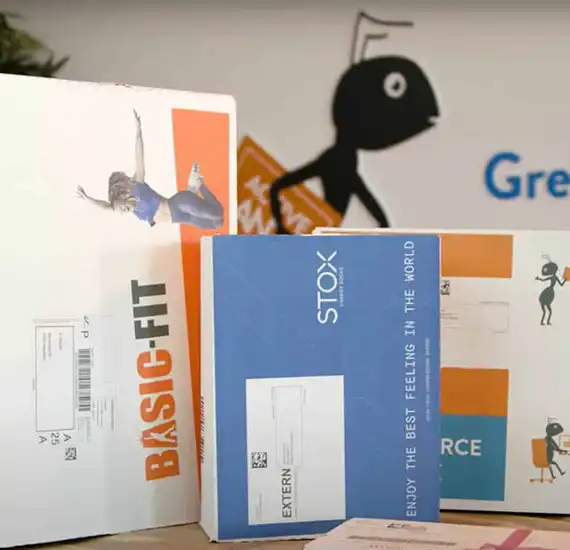
On TikTok, Instagram, and YouTube, unboxing videos are proliferating. They rack up millions of views and influence how brands are perceived. In the fashion industry, some brands have turned this moment into a true ritual: tissue paper, personalized cards, and a visual identity that’s consistent down to the smallest detail. When opening the package, it’s no longer just about receiving a garment ordered online, but about experiencing a carefully crafted journey from start to finish.

This phenomenon points to a deeper shift. Projections indicate that online sales are expected to account for nearly 21% of retail trade in Europe by 2029. As shopping becomes increasingly digital, customer touchpoints often boil down to the package. Packaging is no longer just a logistical tool, but a vehicle for brand image and customer satisfaction.

The package: the moment of truth in the e-commerce experience

In an online shopping journey, it all begins behind a screen. The customer browses, compares, reads reviews, and confirms their cart. Then comes the wait. Receiving the package marks a pivotal moment: the digital promise becomes a tangible experience.
At that precise moment, the brand becomes tangible. The moment of opening acts as a litmus test. If the experience aligns with what was promised online, it builds trust. If it disappoints, even slightly, it can undermine the overall perception.
For some brands, it even becomes a natural extension of the shopping experience. For a brand committed to environmental sustainability, it must also concretely reflect these values by minimizing material waste and adapting the package size to its contents. In any case, packaging serves as visible and immediate proof of the brand promise.

An experience that influences the customer relationship… but imposes operational constraints

  • The hidden cost of empty space in packages

The issue of shipped volume is another major challenge. In e-commerce, a significant portion of packages contain more air than product. This empty space comes at a cost: it increases shipping costs, takes up more warehouse space, and exacerbates the environmental impact.

A package that is too large, filled with empty space, or unremarkable in its presentation can create a disconnect with the brand’s image. Conversely, packaging that is well-proportioned, carefully designed, and consistent with the brand’s identity makes its positioning tangible.

  • A visibility lever amplified by social media

On social media, consumers share their pleasant surprises as well as their disappointments. Posts criticizing excessive or poorly designed packaging are on the rise, as evidenced by the hashtag #excessivepackaging. While oversized packages or those filled with unnecessary padding regularly draw criticism, conversely, elegant, well-designed packaging that stays true to the brand’s identity can inspire consumers to spontaneously share their experience on social media. Every package shipped then becomes a potential vehicle for visibility.

Several studies show that over 40% of consumers say they are more likely to post content on social media when the packaging is premium or distinctive. In fashion, where image plays a central role, this organic visibility can boost brand awareness and foster brand loyalty.

The package: a driver of brand image and performance

Picto quality

Direct impact on brand image

Packaging influences customer perception from the moment it is opened and reflects the brand’s positioning

Picto page WMS

Potential for social media visibility

A well-designed package can be shared spontaneously and boost brand awareness

picto engrenages site SAVOYE

Balancing marketing and logistics

The package must appeal to the customer while adhering to operational constraints

  • Logistical constraints and returns to anticipate

But behind this experience lie very concrete operational realities. In the apparel industry, return rates can reach 20 to 25% depending on the category. Packaging must therefore not only showcase the product but also protect it effectively during transit and remain easy to reuse in the event of a return.

  • Package security at the heart of customer trust

Added to these constraints is another imperative that is often less visible but just as critical: package security. Perceived quality does not rest solely on the aesthetics of the packaging. It also depends on its reliability. Packaging capable of ensuring optimal product support, minimizing impacts during transport, and guaranteeing the package’s tamper-proof integrity directly contributes to customer trust.

  • Automating without compromising the unboxing experience

Automated packaging solutions now make it possible to meet these requirements without compromising the unboxing experience. The integration of automated cushioning systems, holding films, or secure closures enhances product protection while maintaining a polished presentation consistent with the brand’s identity.

  • Finding the right balance between image and performance

The parcel experience must therefore strike a delicate balance: enhancing the brand, protecting the products, and remaining compatible with the economic and logistical constraints of e-commerce.

How can you organize your operations to meet these challenges?

01

Reducing empty space to improve image and performance

02

Standardize the experience without compromising it

03

Personalize at scale

Reducing empty space to improve image and performance

Adjusting the package height to the actual contents helps limit material usage, reduce the need for padding, and decrease the number of trucks required.

For a textile brand, this optimization offers a twofold benefit. It improves customer perception by avoiding the “box too big” effect, while enhancing both economic and environmental performance. Technologies capable of automatically adjusting package size based on fill level—particularly through dynamic height-reduction systems—enable this balance between aesthetics and efficiency. In this vein, a solution such as JIVARO enables a very tangible reduction in unnecessary volume within packages. By automatically adapting the box’s height to its contents, it minimizes the transport of empty space while maintaining a neat package presentation. This approach reconciles logistics optimization with the quality perceived by the customer.

Unboxing Sezane crédit photo alongelleave
Scaling up the experience without compromising it

The goal is obviously not to sacrifice productivity for the sake of aesthetics. In the textile industry, volumes are high, and seasonal peaks demand a sustained pace. The experience cannot rely on labor-intensive manual handling or an ever-increasing variety of packaging options.

The key lies instead in integrating the experience directly into the logistics process. Automating box assembly, adjusting their dimensions in real time, securing the products, and printing personalized elements directly on the package allows for the industrialization of unboxing without complicating operations.

Sezane Unboxing crédit photo Laurine villa
Personalization at Scale

Personalization has become a marketing standard. But it cannot rely solely on pre-printed boxes stored in large quantities. On-demand printing directly onto the package opens up new possibilities.

Integrating a printing module into your packaging line allows you to add a campaign message, a seasonal visual, or a distinctive graphic element at the very moment of preparation. The brand can thus adapt its messaging across collections or key sales periods without making its supply chain inflexible.

The package then becomes a dynamic medium, fully aligned with the marketing strategy, while remaining compatible with industrial constraints. The JIVARO PRINT solution combines personalization, shipping labels, and height reduction in a single process.

Conclusion: The package, a new frontier for differentiation

Packaging is no longer purely a logistical issue. It now sits at the intersection of several key areas: customer satisfaction, brand image, operational performance, and environmental responsibility.

In a textile market where competitive pressure is intense and product differentiation may be limited, the overall experience becomes a decisive factor. And this experience doesn’t begin when the garment is worn. It starts the moment the package is picked up.

Unboxing is no longer just a moment staged on social media. It is a strategic lever that influences perception, loyalty, and, ultimately, profitability. Successful brands are those that have understood that the package is not the end of the logistics journey, but a very tangible extension of their promise.

They trust us

Logo devred site SAVOYE
CHANTELLE customer of SAVOYE intralogistics solutions
Logo Gémo
Logo Kiabi
logo Bouchara site SAVOYE

Learn more

Packaging machines: increased productivity and customer service

Reduce your shipping costs, improve your customers’ experience, and accelerate your logistics flows: our automated packaging solutions transform a simple package into a driver of performance and satisfaction.

Packaging: reduce empty space and unlock performance

Streamlining packaging formats can reduce shipped volume by up to 30%, limit logistics costs, and improve productivity. Less empty space, less transport, fewer consumables: a key approach to handling peak periods, reducing environmental impact, and enhancing the customer experience.

Reduce your shipping volume by 30%!

Discover how to reduce your shipping volume by up to 30% with perfectly tailored packaging. An immediate way to lower your costs, improve the customer experience, and boost your environmental performance.