Spare parts warehouse automation: efficient solutions for spare parts logistics

What is spare parts warehouse automation?

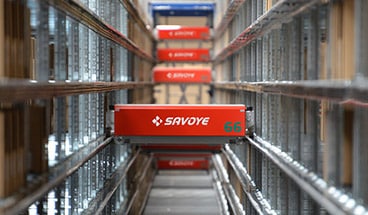
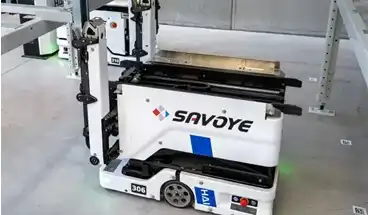
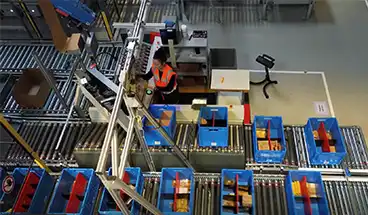
Spare parts warehouse automation is the use of automated storage, picking and material handling technology, ASRS, AMR, goods-to-person and pick-to-light systems, to manage the storage and order preparation of spare parts. It answers a set of constraints rarely found together anywhere else in logistics: tens of thousands of individual references, from a small bolt to a full engine component, that all need to stay instantly available, get picked accurately, and ship within tight, often same-day cut-offs.

Spare parts logistics, particularly in the automotive aftermarket, runs on pull flow: a repair cannot wait, a workshop cannot stay idle, and a customer expects the part before it disrupts their own operations. That means your warehouse has to absorb constant order variability, small quantities, a high number of individual lines per order, urgent requests mixed with planned ones, on top of a steady flow of returns and a strict requirement to trace parts individually, often down to the serial number.

Meeting these constraints manually gets harder as the reference count grows: more aisles to walk, more room for picking errors, more difficulty holding a late cut-off when volumes spike. Automation is what lets a spare parts operation keep its promise, speed, accuracy and traceability, at any scale.


Proven solutions to meet the constraints of your business

Tens of thousands of individual items of all sizes to be delivered within even shorter timeframes, processing of returns, significantly different stock rotation times, etc. All these challenges must be taken into account whether your end customers are garages, repair centers or even private consumers

Very tight deadlines

Spare parts logistics, in particular in the automotive industry, operates on a pull flow basis and responsiveness has become the key word.

To ensure increasingly tight delivery times, later cut-offs, and to optimize their shipping costs, Supply Chain Managers must operate a highly efficient system, capable of managing the picking of several thousand orders in just a few hours.

SAVOYE offers an efficient and flexible logistics tool, combining high-speed execution and high-quality picking to meet these challenges.

Automation technologies for a spare parts warehouse: ASRS, AMR, goods-to-person and pick-to-light

With SAVOYE, the focus is on what matters...

Logo New East site SAVOYE
Logo AD
Logo NB Bergerat site SAVOYE
Logo Brandt
Logo Doyen
Logo Feu Vert
Logo Flauraud
Logo Socah

The logistical challenges of the spare parts sector

Extended item base

Significant and diverse product benchmark

Diverse orders

While focusing on the speed of execution and reducing the number of errors

Repeated deliveries

Deliveries several times per day and urgent orders

PictoSAVOYE

Traceability

Acceptance of serial numbers

Spare parts logistics solutions

Find out how our solutions guarantee you short turnaround times while minimizing the costs of stock being unavailable.

Spare parts warehouse automation in the UAE and GCC

The Gulf’s automotive aftermarket is one of the most demanding spare parts environments in the region: a large and aging vehicle fleet, dealer networks and independent garages that expect same-day or next-day part availability, and distributors managing catalogues spanning multiple vehicle brands and generations at once. Add the re-export flows running through hubs like Jebel Ali, and the number of references a single distribution center has to handle only keeps growing.

For supply chain and logistics directors running this kind of operation across the UAE and the wider GCC, the pressure point is rarely storage capacity alone, it is the ability to pick accurately across an extended item base, hold late cut-offs, and keep costs under control despite rising real estate prices in prime logistics zones and a tight labor market. Automated storage and picking address this directly: higher density per square meter, faster and more accurate multi-reference picking, and a system that scales as your catalogue grows instead of forcing a warehouse redesign every few years.

Our Middle East teams support automotive aftermarket distributors, repair networks and industrial spare parts operators across the region, from initial audit through installation and ongoing support. If you want to improve fill rate, cut delivery times, or simply find out what your warehouse could handle with the right automation, request a quote and our regional team will get back to you.

More questions?

Do you have a project or are you simply looking for ways of optimizing your logistics center? Fill in this questionnaire and we will contact you as soon as possible.

Spare parts warehouse automation Q&A

What is spare parts warehouse automation?

Spare parts warehouse automation is the use of technologies such as ASRS, AMR, goods-to-person and pick-to-light to store, pick and prepare spare parts orders. It allows a warehouse to handle a very large and diverse item base, tight delivery deadlines and individual traceability requirements without relying solely on manual labor.

Which technologies suit fast multi-SKU parts picking?

Goods-to-person and pick-to-light systems are generally the most effective for fast, accurate picking across many different SKUs on the same order. Goods-to-person removes walking time by bringing stock to the operator, while pick-to-light guides manual picking visually, reducing errors when order lines combine very different part types and sizes.

How do you manage tens of thousands of SKUs in an automated warehouse?

High-density ASRS storage, such as a shuttle system, keeps large reference counts, including slow-moving and long-tail parts, accessible without expanding the warehouse footprint. Combined with a WMS that manages storage locations, stock levels and picking priorities in real time, this lets tens of thousands of SKUs stay both dense and instantly available.

How much does spare parts warehouse automation cost and what is the ROI?

Cost depends on the mix of technologies (ASRS, AMR, goods-to-person, pick-to-light), the size of your item base and the level of integration required. ROI is typically measured through faster order preparation, fewer picking errors, higher parts availability and reduced dependency on temporary labor during demand spikes. Our teams size each project against your actual catalogue and volumes to build a business case specific to your operation.