How to choose the right pick to light system, put to light system and warehouse picking systems?
Choosing the right picking system is not a one-size-fits-all decision; it depends entirely on your product characteristics, order profiles, and growth targets. A specialized partner like SAVOYE helps you analyze your transactional data to determine whether a Pick-to-Light system (ideal for high-density, fast-moving items) or a Put-to-Light system (perfect for sorting consolidated batch-picked orders into individual customer packages) is the best fit for your facility.
Key criteria for selecting a picking system
When evaluating different warehouse picking systems, you should focus on four essential criteria:
- SKU velocity (ABC analysis): high-velocity items (A-class) benefit most from Pick-to-Light, while slower-moving items (B and C-class) can be integrated using RF scanners or Voice Picking to keep costs optimized.
- Order profile and density: if your customers order multiple items per transaction (common in retail and B2B), a Put-to-Light sorting wall is highly efficient. If orders are small or single-item (common in e-commerce), direct Pick-to-Light is preferred.
- Hardware durability and flexibility: ensure the light modules are industrial-grade, shock-resistant (to withstand accidental knocks by bins), and easy to clip/unclip if you need to reconfigure your shelving layouts.
- Software intelligence: the hardware is only as good as the software driving it. The picking system must connect seamlessly with a dynamic WCS to allow real-time replenishment alerts, order prioritizing, and instant error-blocking.
When to implement warehouse picking systems
You should consider transitioning from manual paper or basic scanning to an advanced light-directed picking system when you encounter the following indicators:
- Surging eError rates: if incorrect items or wrong quantities are consistently reaching your packing area, resulting in high return processing costs.
- Onboarding bottlenecks: if you rely on temporary labor during peak seasons (such as Ramadan or White Friday) and find that training staff on handheld terminals takes too long or creates language barrier issues.
- Throughput plateaus: if your pickers are walking constantly and you have reached a physical limit on how many order lines can be processed per day.
- Space limitations: when you need to transition to a zone-picking strategy to make better use of your current warehouse footprint without expanding physically.
Pick-to-light vs put-to-light vs voice picking: which to choose?
Pick-to-light vs Put-to-light vs Voice picking
| Criteria |
Pick-to-light |
Put-to-light |
Voice picking |
| Principle |
Lights guide the operator to the location and quantity to pick |
Lights guide distribution of picked items into order bins |
Voice instructions guide and confirm picks hands-free |
| Main use |
Picking from storage locations |
Order sorting and consolidation |
Picking across wide or changing areas |
| Picking accuracy |
High |
High |
Moderate to high |
| Throughput |
High in dense zones |
High for batch and multi-order sorting |
Moderate |
| Operator mobility |
Fixed zones |
Fixed put wall |
Fully mobile, hands and eyes free |
| Hands-free |
No (visual confirmation) |
No (visual confirmation) |
Yes |
| Training time |
Short |
Short |
Short to moderate (voice setup) |
| Multilingual teams |
Language-independent (visual) |
Language-independent (visual) |
Depends on voice language support |
| Investment |
Low to moderate |
Low to moderate |
Low (no fixed hardware per location) |
| Best fit |
Fast movers, high-density SKU zones |
E-commerce sorting, batch picking, consolidation |
Cold storage, bulky goods, large or evolving layouts |
Pick to Light System Put to Light System Warehouse Picking Systems FAQ
How much does a pick to light system cost?
The investment in a Pick-to-Light system depends on the number of storage locations (shelves or slots) that need to be equipped with digital light modules and the overall complexity of the warehouse layout. Because SAVOYE designs modular and highly adaptable picking tools, the system can be tailored to equip only your high-rotation zones (A-class items) first. This modularity makes the initial CAPEX highly manageable and scalable.
What is the ROI of a put to light system?
Most businesses in the Middle East achieve a complete Return on Investment (ROI) for a SAVOYE Put-to-Light system within 12 to 18 months. The rapid payback is achieved through:
- Up to 50% increase in picking and sorting speed, allowing you to process more orders per shift.
- Near-zero picking errors (accuracy rates exceeding 99.9%), which drastically reduces the massive costs associated with returns, re-shipping, and customer service claims.
- Extremely fast training times, allowing temporary or seasonal workers during peaks like Ramadan to be fully productive in under 15 minutes.
How long does it take to implement warehouse picking systems?
An implementation of a SAVOYE light-directed picking system typically takes between 2 to 4 months. This relatively short timeline includes the physical installation of the light profiles on your existing racking, the setup of the control software, and the integration with your warehouse management systems.
Can pick to light systems integrate with WMS?
Yes, seamless integration is essential for real-time inventory synchronization. SAVOYE’s Pick-to-Light and Put-to-Light systems integrate natively with our own WMS (Warehouse Management System) and WCS (Warehouse Control System). They can also be easily interfaced with third-party ERPs or legacy WMS solutions. This ensures that as soon as an operator confirms a pick, the stock level is updated instantly across your entire business.
Are warehouse picking systems suitable for high-volume operations?
Absolutely. In fact, they are specifically engineered for high-velocity, high-density environments. Whether you are managing e-commerce retail, cosmetics, pharmaceuticals, or spare parts, SAVOYE’s picking tools excel during intense operational peaks. By removing the bottleneck of manual scanning or paper reading, they allow your warehouse to maintain a smooth, rapid flow of outbound orders even under extreme volume pressures.
What is the difference between a pick-to-light and a put-to-light system?
Pick to light and put to light systems both use LED displays to guide warehouse operators, and both deliver high accuracy and throughput. But they serve distinct purposes within the order preparation process, and understanding that distinction is essential to deploying them in the right place.
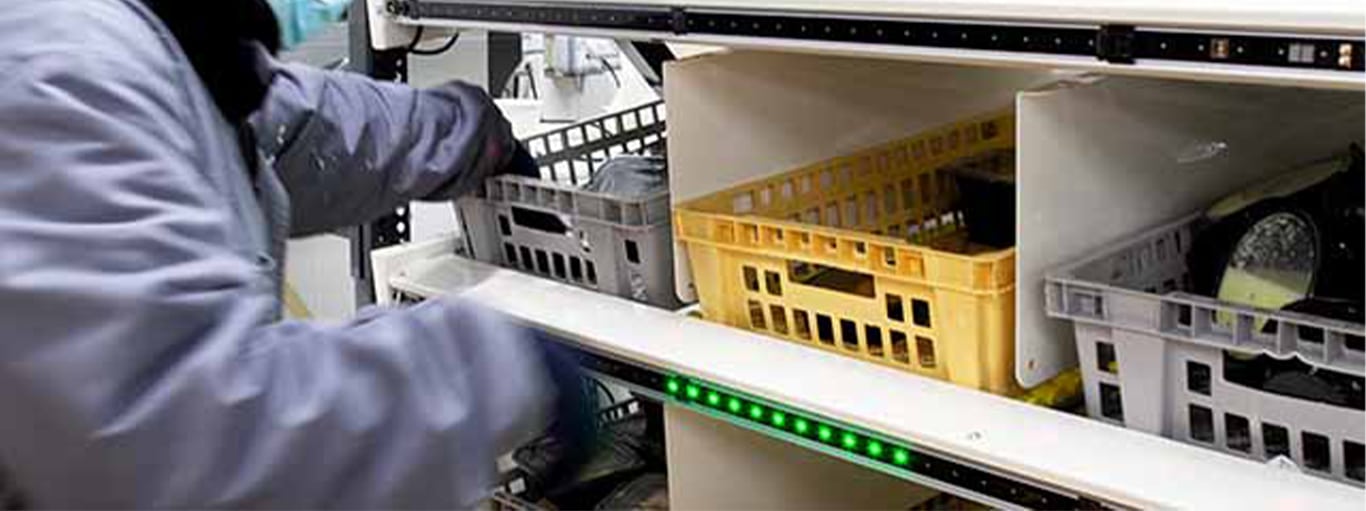
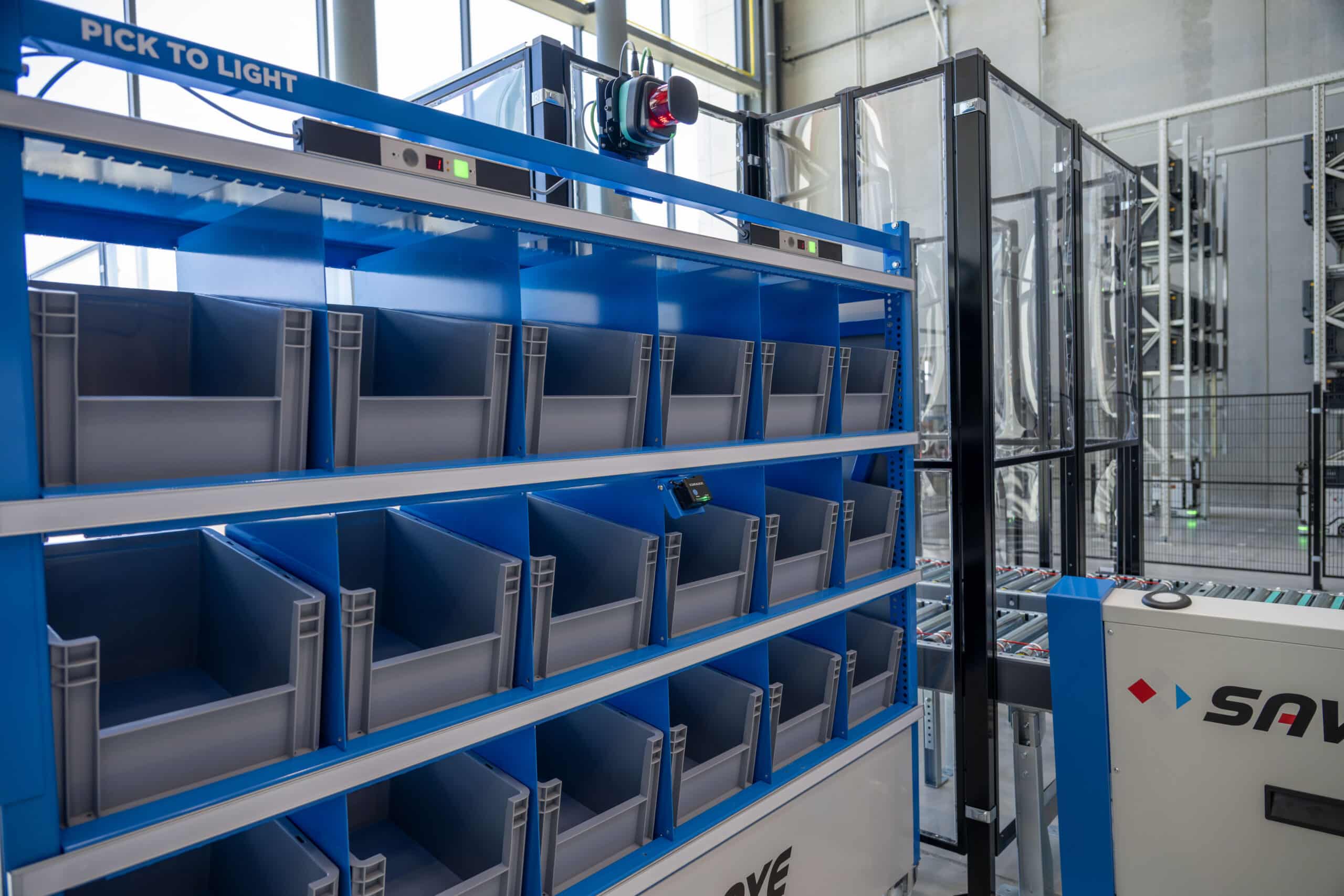
A pick to light system guides the operator at the moment of retrieval. The operator moves through a picking zone and the LED displays mounted at storage locations light up to indicate which product to take and in what quantity. The operator picks, confirms, and moves to the next location. The system eliminates the need to read paper lists or interpret screen instructions, keeping the operator focused and fast.
A put to light system guides the operator at the moment of distribution. After picking a batch of items, the operator scans each product and the system indicates which order bin to place it in. The LED display on the correct bin lights up with the quantity to deposit. The operator places the item, confirms, and the system moves on. Put to light is about sorting accurately at high speed, not about locating products in storage.
In practical terms, pick to light belongs at the picking face, in the aisles or zones where products are stored. Put to light belongs at the consolidation wall or sorting area, where picked items are distributed into individual orders before shipping.
The two systems are not competing alternatives. They are complementary stages of the same workflow. Many high-performing warehouses deploy pick to light in the storage zone and put to light at the consolidation station, combining the speed of guided picking with the accuracy of guided sorting to maximise throughput and minimise errors across the entire order preparation process.
SAVOYE designs picking installations that integrate both systems within a coherent, software-orchestrated workflow, ensuring each technology operates where it delivers most value for your specific operation.
Pick-to-light or voice picking: which is best for your warehouse?
Pick to light and voice picking are both proven technologies for guiding warehouse operators through the order preparation process, and both deliver measurable improvements in accuracy and productivity compared to paper-based methods. The right choice depends on the specific characteristics of your operation.
Pick to light performs best in high-density picking zones where operators work within a defined area and speed of execution is a primary objective. Because the instructions are visual and require no headset, no language configuration, and no spoken confirmation, pick to light is fast to learn, works equally well across multilingual teams, and delivers very high throughput in environments where operators are stationed at or moving through a concentrated picking face. It is the preferred solution for fast-moving SKU zones, batch picking operations, and any environment where the volume of picks per hour is a critical performance indicator.
Voice picking performs best when operator mobility is the priority. In operations where pickers need to move across large warehouse areas, navigate changing layouts, or work in cold storage environments where handling a screen or confirming picks physically is impractical, voice picking offers a genuine advantage. Operators receive spoken instructions through a headset and confirm picks verbally, keeping both hands and eyes entirely free. This makes voice picking particularly well suited to bulky goods handling, wide-area operations, and environments where flexibility matters more than raw throughput density.
For most distribution centres in the Middle East, where operations combine high-volume fast-mover zones with a broader SKU range and seasonal demand peaks, the most effective approach is often a combination of both. Pick to light covers the high-cadence, high-density zones where speed and accuracy under pressure are non-negotiable. Voice picking handles the wider, more variable areas where mobility and flexibility take precedence.
SAVOYE’s design teams work with supply chain and logistics directors to analyse your picking flows, your building layout, and your operator profile, then recommend the technology mix that delivers the strongest return on investment for your specific situation. The goal is never to apply a standard template. It is to build a picking system that fits the way your warehouse actually works.