
What is an Order Management System (OMS)?
Definition of an order management system
An Order Management System (OMS) is the “brain” of your omnichannel ecosystem. It is a software platform that centralizes and automates the entire lifecycle of an order—from the moment a customer clicks “buy” on any channel to final delivery and even returns.
How an OMS works in omnichannel commerce
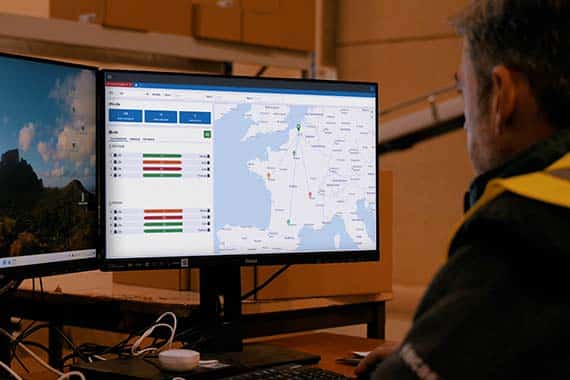
In an omnichannel world, inventory is often spread across warehouses, dark stores, and physical retail shops. The SAVOYE ODATiO OMS acts as a conductor, identifying the best location to fulfill an order based on stock availability, proximity to the customer, and shipping costs.
How to choose the right Order Management System?
Choosing the right OMS requires looking beyond simple order tracking. You need a partner like SAVOYE that understands the complexities of the Middle East’s logistics landscape. The right choice should provide a “Distributed Order Management” (DOM) capability, allowing you to orchestrate flows across multiple nodes effortlessly.
What are the key criteria for selecting an OMS?
When evaluating an OMS, focus on:
- Connectivity: can it easily link to your existing e-shop, marketplaces, and ERP?
- Scalability: can it handle massive peaks during events like White Friday or Ramadan sales?
- Real-time visibility: does it offer a global view of inventory across all locations?
- Flexibility: can you easily change fulfillment rules (e.g., “ship from the store with the most overstock”)?
OMS vs WMS vs ERP: What’s the difference?
- ERP (Enterprise Resource Planning): the system of record for finance, purchasing, and master data.
- WMS (Warehouse Management System): manages the physical execution *inside* the warehouse.
- OMS (Order Management System): the “master of ceremonies” that sits above these systems. It decides *where* the order should go (OMS) before the warehouse (WMS) picks it, and the financial data is recorded (ERP).
Order Management System : omni-channel and multi-location stock management
Increasing customer demands, combined with a multiplication in sales and distribution channels, are requiring distribution companies to make organizational changes. In order to respond to market developments, logistics organizations are increasingly combining central platforms, regional warehouses, overflow sites, local depots and cross-docking platforms. Store networks are being digitized and transformed into places for accepting and preparing orders. Whatever the stock location, warehouse or store, the challenge is to define the best scenario enabling customer satisfaction to be maximized. The lack of an orchestration system entails, on the one hand, a duplication and oversizing of stock and, on the other hand, a relatively simple distribution of orders: product families, regional distribution, B2B or B2C flows. The organization is quite rigid and, often, not very agile in unpredictable situations. This is where OMS comes in. Deploying it will enable you to remove the constraints. You are now free to rethink your organization, as the information system will be able to orchestrate and manage flows based on complex rules and give you the necessary tools to respond effectively to uncertainties. The OMS allows you to build a fluid and responsive ecosystem, to redesign your network and its flow management without turning the architecture of existing systems upside down.